An industry perspective on the future of Pakistan’s textile manufacturing, advanced materials and research-led industrial transformation.
A crisis beyond energy prices and taxation
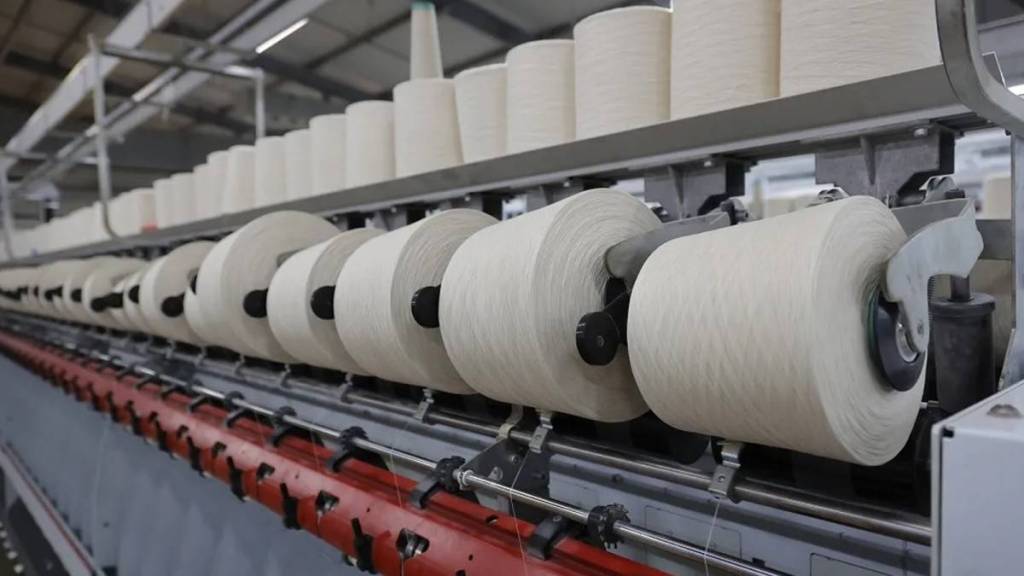
Pakistan’s spinning industry is facing one of the most serious structural crises in its history. Rising energy costs, high taxation, expensive financing, inconsistent government policies, imported yarn competition and declining domestic cotton availability have pushed numerous spinning mills towards closure.
The scale of the problem is alarming. In February 2025, APTMA reported that more than 100 spinning mills had shut down, representing approximately 40% of industry production capacity. A subsequent PACRA sector study in October 2025 highlighted negative net margins, declining yarn export competitiveness and increasing dependence on imported higher-quality yarn.
However, looking at this crisis exclusively through the lens of energy tariffs and taxation would be an incomplete diagnosis.
Pakistan’s spinning industry has also suffered from decades of inadequate investment in research, product innovation, technological advancement and value addition.
Much of the industry continues to compete in conventional cotton and commodity yarn markets, where margins are increasingly squeezed by international competition. While machinery upgrades and operational efficiencies are important, they cannot independently create sustainable competitive advantages.
The industry needs to move beyond producing more kilograms of conventional yarn and start producing yarns with differentiated properties, specialised applications and higher commercial value.
What China did differently: From commodity yarn to advanced materials.
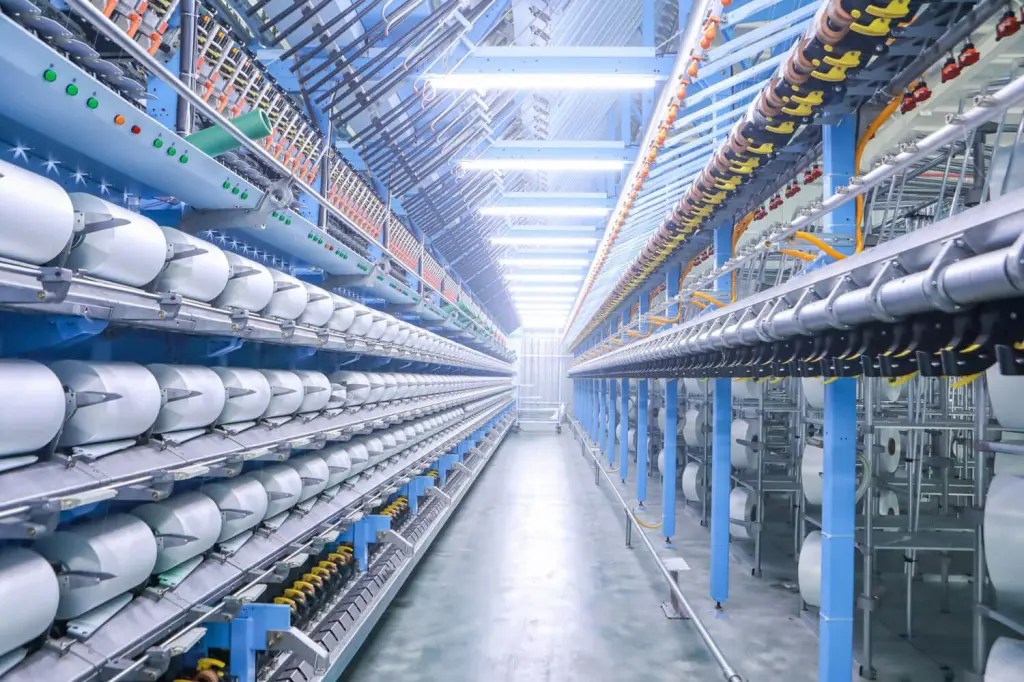
China recognised that the future of textiles would not be limited to apparel, home textiles and conventional fabrics. It strategically invested in man-made fibres, high-performance synthetic yarns, advanced materials and technical textiles.
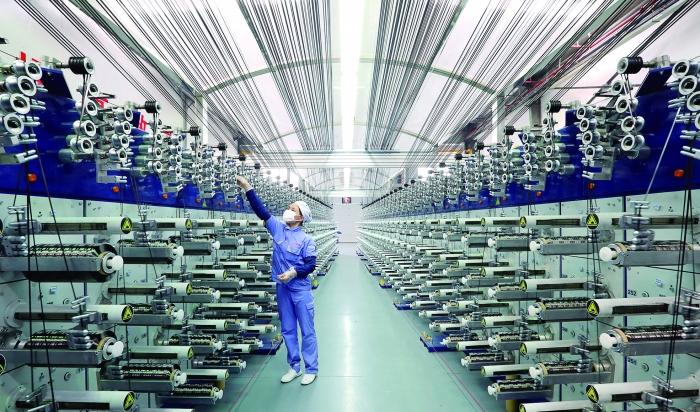
Its approach involved connecting universities, research institutes, chemical companies, fibre manufacturers and downstream industries to develop technologies and commercialise new products.
China’s 2022 national policy for high-quality development of the chemical fibre industry set a target of R&D expenditure reaching 2% of industry revenue by 2025. It also identified specific technology priorities for carbon fibre, para-aramid, meta-aramid and ultra-high-molecular-weight polyethylene (UHMWPE) fibres.
Some important examples illustrate this transformation:
- Carbon fibre: Development of domestic manufacturing capabilities for high-strength, lightweight materials used in aerospace, wind energy, automotive and sports applications.
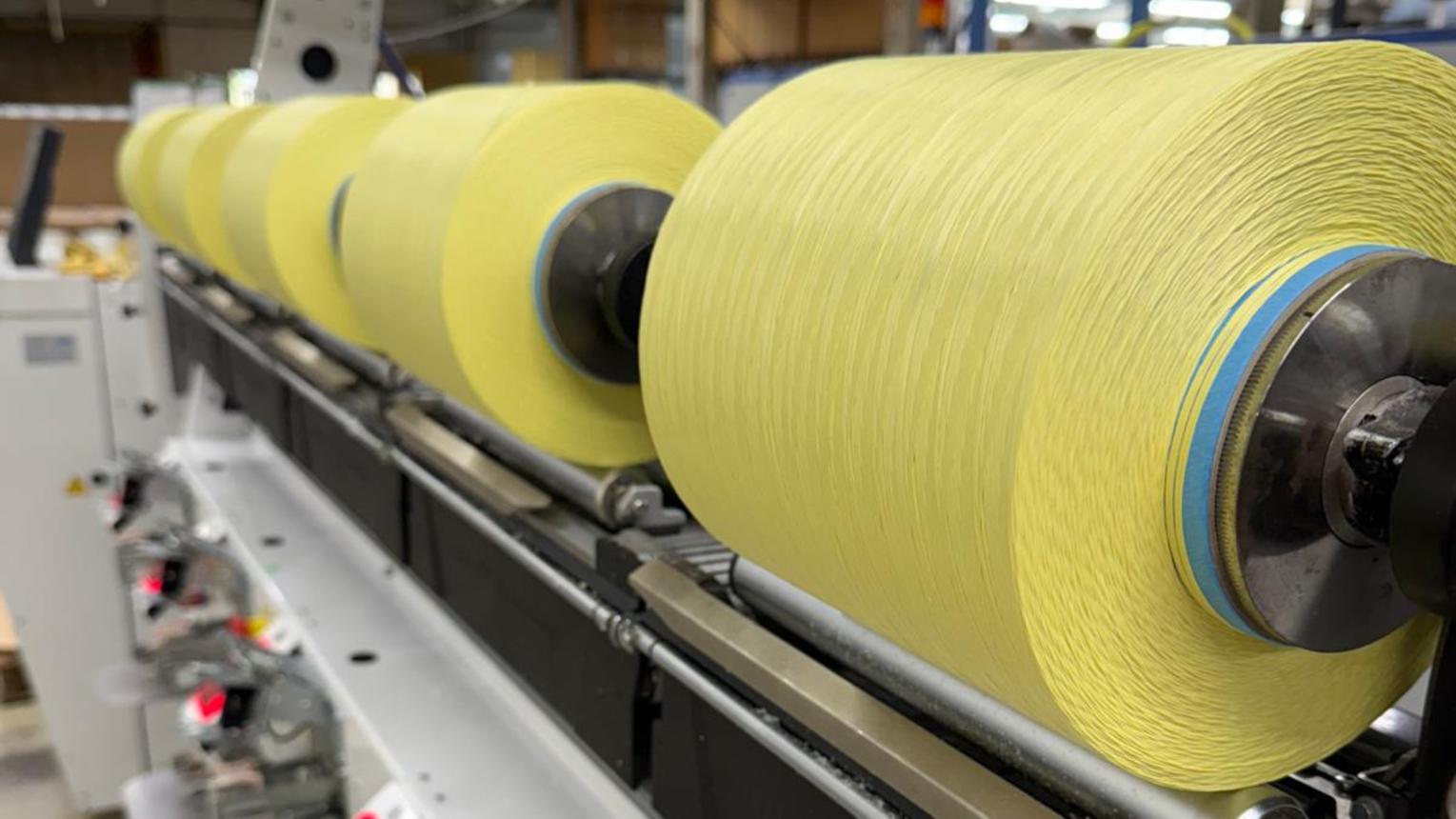
- Aramid yarns: Investment in high-temperature-resistant and high-strength fibres for protective clothing, fire-resistant textiles, industrial applications and ballistic protection.
- UHMWPE yarns: Development of lightweight, high-strength yarns for cut-resistant gloves, ballistic protection, ropes and other demanding applications.
- High-performance nylon 6,6 industrial yarn: Development of advanced polymerisation and direct melt-spinning technologies for high-performance tyre reinforcement.
A particularly interesting example is China’s industrial PA66 yarn development, where a decade of collaborative research resulted in a 10,000-tonne production line, 35 invention patents and commercial applications in high-performance tyres.
This is the difference between simply manufacturing yarn and developing proprietary material technologies.
Pakistan versus China: A strategic comparison
| Area | Pakistan’s traditional approach | China’s development approach |
|---|---|---|
| Business focus | Commodity yarn production | Commodity and specialised materials |
| R&D investment | Limited and fragmented | Strategic, targeted and collaborative |
| Product portfolio | Primarily conventional cotton and blended yarns | Advanced synthetic and high-performance fibres |
| Technology | Incremental machinery upgrades | Polymer, fibre and spinning technology development |
| Collaboration | Limited industry-academia integration | Industry, universities and research institutes |
| Market positioning | Price and volume competition | Technology, performance and application-based value |
| Value addition | Primarily conventional textile supply chains | Technical textiles and advanced material ecosystems |
The comparison is not to suggest that China has abandoned commodity spinning. Rather, it has built additional capabilities that allow its industry to compete in higher-value markets.
What Pakistan’s spinning industry must do now
Pakistan does not necessarily need to replicate China’s entire industrial ecosystem. It needs a practical, phased strategy to develop its own advanced yarn manufacturing capabilities.
I believe the following five areas deserve immediate attention:
1. Establish dedicated spinning R&D and innovation centres
Major spinning groups should establish R&D facilities with specialists in fibre science, polymer engineering, yarn technology and material development. R&D must become an integral part of business strategy rather than an occasional activity.
2. Diversify into high-value synthetic and speciality yarns
Instead of depending predominantly on conventional cotton yarn, manufacturers should explore:
- High-tenacity polyester and nylon industrial yarns.
- Recycled and bio-based polyester yarns.
- PLA and other biodegradable synthetic yarns.
- Conductive and antistatic yarns.
- Flame-retardant and inherently protective yarns.
- High-performance core-spun and composite yarns.
- Specialised elastomeric and stretch yarns.
- Aramid and UHMWPE yarns through appropriate technology partnerships.
3. Develop industry–academia partnerships
Universities, research institutions and industrial manufacturers must work together on commercially viable research. Research should be measured not merely by publications but by patents, new products, industrial applications and revenue generated through innovation.
4. Invest in pilot-scale technology development
The industry needs pilot facilities for polymer processing, melt spinning, filament development, advanced staple fibre spinning, yarn modification and performance testing. These facilities would allow manufacturers to develop and validate new products before committing to expensive commercial-scale investments.
5. Connect yarn innovation with technical textile markets
The real opportunity is not simply to manufacture specialised yarns but to develop complete material solutions for automotive, healthcare, defence, construction, filtration, protective clothing, sportswear and industrial applications.
The way forward: From spinning mills to material innovation companies
China’s experience offers an important lesson: industrial competitiveness is built through technological capabilities, not merely production capacity.
China’s technical textile industry processed approximately 22.8 million tonnes of fibres in 2025, demonstrating the scale of the ecosystem it has developed.
Pakistan still has an established textile manufacturing base, experienced industrialists, engineering talent and access to international textile markets. However, these advantages will gradually lose their significance if the industry continues to compete primarily on the basis of manufacturing costs.
Government support through competitive energy tariffs, consistent export policies, taxation reforms and affordable financing is essential. But equally important is a change in the industry’s own mindset.
The future of Pakistan’s spinning industry will not be determined by how many conventional spindles it operates, but by how much innovation, technology and value it can generate from every kilogram of fibre.
It is time for Pakistan’s spinning industry to move from commodity manufacturing towards advanced materials and technical textile innovation.
The question is no longer whether Pakistan can afford to invest in R&D. The real question is whether Pakistan can afford not to.
Key Take Away: Pakistan’s spinning industry cannot survive on conventional yarn manufacturing alone; it must transition from commodity spinning to innovation-led, value-added and high-performance yarn manufacturing. China’s experience demonstrates how investment in R&D, advanced materials, technical capabilities and industrial policy can create entirely new textile markets.
#PakistanTextileIndustry #SpinningIndustry #ResearchAndDevelopment #TechnicalTextiles #AdvancedMaterials #SyntheticYarns #TextileInnovation #IndustrialTransformation #MadeInPakistan


Leave a Reply